
Vacation in Waikiki: What to Know Before You Go

Updated: Oct 31, 2025

Welcome to Waikiki: A Vibrant Slice of Oʻahu
Planning a Waikiki vacation? You’re in for a getaway that’s as exciting as it is unforgettable. Waikiki isn’t just a place—it’s a full experience. This iconic stretch of Honolulu is where city buzz meets island relaxation, where you can sip a mai tai under the stars, walk to world-class shopping, and still catch the perfect sunset with your feet in the sand. Whether you’re staying high above the waves in an ocean-view suite or just steps from the beach, a vacation in Waikiki means having culture, scenery, and entertainment all within arm’s reach.
From the moment you arrive, Waikiki moves at a rhythm all its own. The streets are alive with music, torch lighting ceremonies, street performers, and the warm scent of garlic shrimp and fresh leis. It’s walkable, energetic, and always awake—perfect for those who love a blend of beach days, active nights, and never running out of things to explore.
Waikiki vs. Ko Olina—What’s the Difference?
Waikiki and Ko Olina both have their charm, but they’re entirely different vibes. Waikiki is lively, compact, and walkable—great for visitors who want variety, energy, and endless food and shopping right outside their door. In contrast, Ko Olina is laid-back and resort-centered, with fewer crowds, quiet lagoons, and more of a “retreat” feel.
Want to go deeper into the differences? Check out this breakdown of Waikiki vs. Ko Olina to decide which destination fits your vacation personality best.
Choosing the Right Resort in Waikiki
Not all resorts in Waikiki are created equal—and choosing the right one can make or break your stay. With so many hotels packed into a relatively small beachfront area, location, layout, and amenities vary more than most travelers expect.

Small details like warm lighting throughout the property, outdoor lounge areas, or cozy evening ambiance can completely change the mood of your stay.
When you're planning your stay, one of the most important questions to ask is: Is this a true beachfront resort? In Waikiki, some properties may market themselves as “beachfront” when in reality, there’s a busy street between the resort and the sand. If direct beach access is a priority, it's worth double-checking the map and understanding the resort’s actual location.
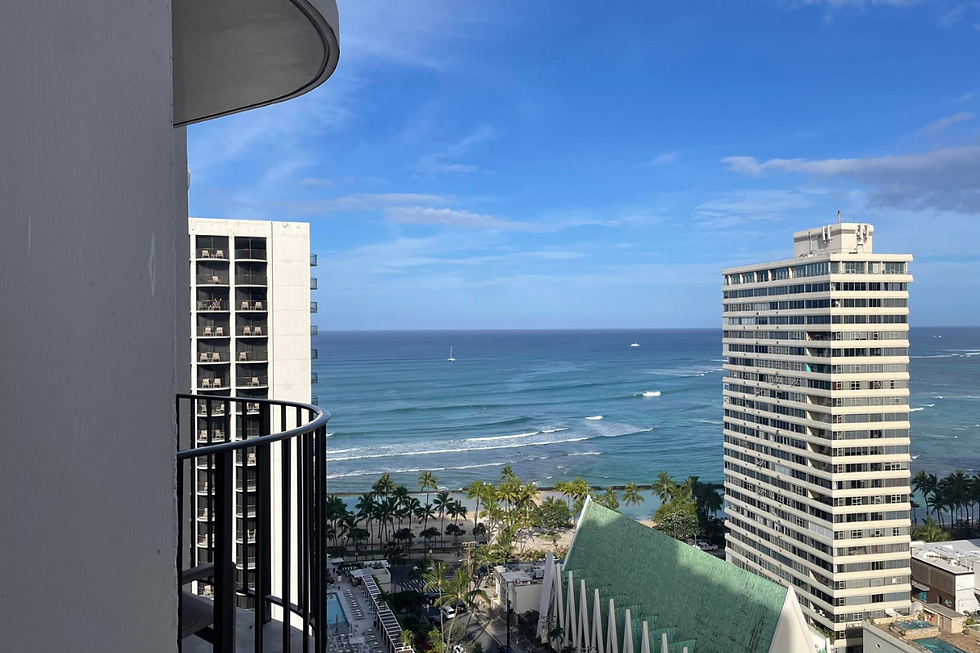
A high-up balcony gives you stunning views like this—perfect for morning coffee or winding down with the sunset.
Many resorts offer beach towel service, surfboard or paddleboard rentals, and activities right on-site—but others don’t. Knowing your resort’s amenities ahead of time helps you avoid surprises. For example, if you're traveling with kids, easy elevator access to the pool or beach might be more important than proximity to nightlife. If you're focused on relaxation, a quiet garden lanai might win out over a bustling street-facing room.
From amazing views to charming resort lighting and thoughtful amenities, these little details are what elevate your stay. Don’t just book a name—book the right fit for your travel style. This is one of those times where it truly pays to work with a travel advisor who knows the area, the resorts, and the layout of Waikiki itself.
Should You Rent a Car in Waikiki?
One of the most common questions we get is: Do I really need a rental car in Waikiki? The answer depends entirely on how you want to vacation.

Some Waikiki resorts offer their own garage parking—but that convenience comes at a premium.
If your plan is to mostly stay at your resort, spend your days on the beach, and explore local shops or restaurants on foot, you may not need a car at all. Waikiki is very walkable, and many popular spots are within easy distance. On top of that, a lot of tours—like island sightseeing, snorkeling, and even Pearl Harbor—offer transportation from Waikiki hotels.
However, if you want to explore Oʻahu on your own schedule—without depending on tour group times or being packed in with crowds—then having a car gives you ultimate freedom.
A few things to keep in mind:
Rental car rates in Hawaii are often higher than on the mainland.
Parking at resorts can run on average $40–$60 per night.
Traffic through downtown Honolulu can be heavy, especially during peak hours.
If your resort has its own parking garage (like the one pictured), it’s more convenient, but it still adds to your daily costs.
In short: if you're focused on convenience, staying local, or using tour transportation, a rental car may not be necessary. But if you want the flexibility to explore on your own time and skip the group scene, a rental car is worth considering—even if it comes with a higher price tag.
Booking Tours Around Oʻahu

Because many travelers weigh this against renting a car, we’re covering tours here—just before we get into the kinds of activities you might want to do around Oʻahu.
If you're not planning to rent a car, guided tours can be a fantastic way to explore the island without the hassle of driving or paying for resort parking. Many of the island’s top attractions—like Pearl Harbor, the Dole Plantation, or the North Shore—are offered as full or half-day tours with transportation included from major hotels.
Tours vary in pace and style. Some are structured with set times and multiple stops, while others focus on just one experience, like a cultural luau, a snorkeling trip, or a movie-site tour at Kualoa Ranch. They’re a great option if you want to see more of the island without managing the details yourself.
When booking, check the fine print—pickup isn’t always at your hotel, and some vendors may require a short walk to a central meeting point. Be sure to review cancellation policies and reserve early during busy travel periods.
Whether you go the tour route, rent a car, or mix both into your itinerary, Oʻahu gives you plenty of ways to see the island on your terms.
Things to Do in Waikiki
Waikiki offers a mix of iconic landmarks, cultural sites, scenic hikes, and hands-on activities—all in one walkable destination. Whether you're here for the views, the history, or the food, there’s no shortage of experiences to add to your Waikiki vacation.
Before you start booking, it’s important to understand the details and logistics that come with each activity. For example, as of July 9, the National Park Service has temporarily suspended 56-day advance reservations for the USS Arizona Memorial tour due to preservation work. Guests visiting after September 3 may still have access, but only on a first-come, first-served basis, or by booking through Recreation.gov when next-day reservations become available. You’ll still need to check in with a digital or printed ticket, and tickets are non-transferable.
Other tours and excursions, especially those outside Waikiki like UTV rides in Jurassic Valley, may require you to bring the physical credit card you booked with and a matching photo ID—no exceptions. Showing up without those could mean losing your spot, even if you paid in full.
Fortunately, all of this can be easily navigated with the help of a travel agent who’s familiar with Oʻahu’s booking processes, current guidelines, and what to expect before you arrive.
Pearl Harbor and the USS Arizona Memorial

Welcome to Pearl Harbor
The sign at the entrance is more than just a photo op—it’s the first reminder that you're stepping into a place of national remembrance. The grounds are beautifully maintained and accessible, with helpful staff and volunteers ready to guide you. From this point forward, the tone shifts—you’ll find it respectful, quiet, and deeply moving.

The Memorial Wall of Names
Inside the white structure of the USS Arizona Memorial, there’s a quiet, sacred space where the names of 1,177 fallen service members are etched into a marble wall. This tribute honors each sailor and Marine who never made it home. Standing before it, you’re not just reading names—you’re witnessing a roll call of lives lost in an instant. It’s a space of stillness, reflection, and profound respect. The weight of history is felt here more than anywhere else in the memorial.

Understanding the Battleship Below
You’ll come across diagrams that explain the layout of the USS Arizona beneath the surface and how the memorial was built directly above it. These visuals help you understand the scale of the battleship and offer context for what lies just below the waterline. It’s educational, and it helps tie the history to what you’re seeing in real time.

The Ship’s Bell—A Preserved Artifact
One of the most striking pieces on display is the original ship’s bell from the USS Arizona. It survived the attack and was recovered afterward. Seeing it up close adds another level of realism—you’re not just reading about history, you’re standing in front of it. It’s a great reminder of the scale of the ship and the legacy of its crew.

Viewing the Ship Beneath the Surface
From the platform above, you can look directly down into the waters of Pearl Harbor and see the remains of the USS Arizona. Large sections of the ship are still visible beneath the surface—rusted and silent, yet remarkably intact in places. You may see oil rising gently to the water’s surface, often referred to as “the black tears of the Arizona.” It’s a powerful sight that stays with you, a reminder that this isn’t just a story from the past—it’s a gravesite, and a place of national mourning.
Hiking Diamond Head

Passing Through the Tunnel
One of the most memorable parts of the Diamond Head hike is this narrow tunnel carved into the crater wall. It’s dark, a bit cooler inside, and adds an unexpected sense of adventure. This section marks the shift from steady climbing into the more intense final stretch—what comes next is where the real workout begins.

The Steepest Climb
After the tunnel, the trail gets serious—steep switchbacks, narrow ledges, and a staircase that will definitely make your legs feel it. This is the part where most people slow down, hydrate, and question their life choices. But here’s your incentive: at the bottom, there’s a kiosk selling a Diamond Head t-shirt that says you made it to the top. So, push through—imagine that shirt waiting for you, ready to prove to everyone (and your knees) that you conquered it.

Panoramic Summit Views
You made it! All that climbing paid off with wide-open views of Waikiki, the Pacific Ocean, and the island stretching in both directions. It’s the kind of scene that makes you pause and take it all in. After snapping your photos and catching your breath, don’t forget your reward—head back down and grab that t-shirt at the base. You earned it, and now you’ve got proof that you conquered Diamond Head.
Strolling Past Waikiki’s Historic Statues

You don’t need a map or a plan to discover some of Waikiki’s most iconic figures—just start walking along Kalākaua Avenue and the beachfront paths, and you’ll naturally come across several statues that honor Hawaiian history and culture. They’re not tucked away or hard to find; many are right in the heart of the action, surrounded by palm trees, surfboards, and the gentle sound of waves.
The Duke Kahanamoku statue is easily the most famous, paying tribute to the legendary surfer and Olympic swimmer who helped popularize surfing around the world. But he’s not the only one to look out for—Prince Kūhiō, Queen Liliʻuokalani, and other local legends are also commemorated in beautiful bronze and stone throughout the area.
These statues offer more than just great photo ops. They serve as a quiet reminder that while Waikiki is a popular vacation destination, it’s also a place deeply rooted in Hawaiian heritage. Pause, read the plaques, and take in the meaning behind each monument.
Relaxing on Waikiki’s Beaches

Daytime on the Sand
Waikiki Beach during the day is everything you'd expect—golden sand, turquoise water, and iconic views of Diamond Head in the distance. Whether you're renting a chair or just laying out a towel, it’s the perfect spot to unwind between excursions or spend the whole day soaking up the sun. The beach is lively but not chaotic, with easy access to food, drinks, and shade when you need it.

Sunsets That Stop You in Your Tracks
As the sun starts to set, Waikiki’s energy shifts. The sky turns shades of gold, pink, and orange, and the beach takes on a quieter, almost magical feel. Locals and visitors gather along the shoreline, some with cameras, others just watching the moment unfold. It’s the kind of view that makes you want to pause and take a deep breath—Hawaiʻi at its most peaceful.
Fishing and Snorkeling Adventures
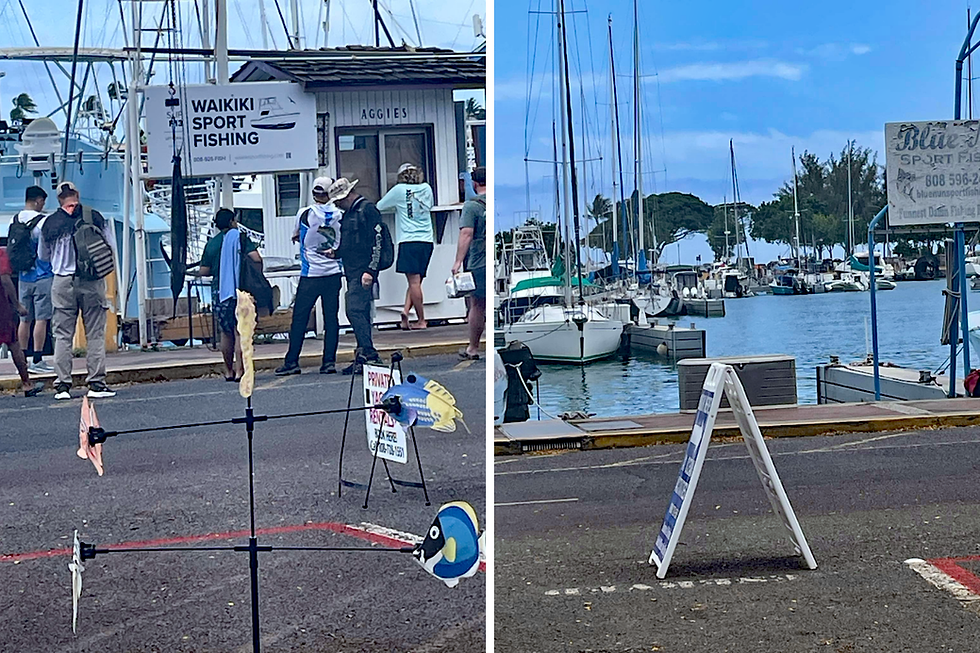
Fishing charters and snorkel tours are widely available. If you're staying in Waikiki, you can book trips to nearby reefs or head out on the water for a casual fishing experience. Just be sure to confirm what's included before booking.
The Food Scene in Waikiki

Waikiki is full of places to eat—from food trucks to beachfront restaurants. Be sure to grab a slice of Hawaiian pizza while you’re here. It’s a small but memorable highlight.
Grimaldi’s Pizzeria: A Top Pick
Grimaldi’s is a great pick for stone-baked, New York-style pizza with generous slices and a casual, family-friendly atmosphere. Their dessert menu includes strawberry cheesecake, blueberry cheesecake, tiramisu, and cannoli—all made in-house.
Food is generally on the expensive side in Waikiki, so it helps to be prepared and budget for it.
Visiting the Dole Plantation

Some full-day tours include a stop here, but you can easily go on your own if you want more flexibility. You’ll find gardens, a train ride, and of course—the famous Dole Whip. Don’t leave without trying it.
Jurassic Park and UTV Adventures at Kualoa Ranch

Located in Kaʻaʻawa Valley—best known as Jurassic Valley thanks to its role in Jurassic Park and countless other films—Kualoa Ranch offers UTV tours that take you deep into some of the most iconic and breathtaking scenery on Oʻahu.
This isn’t just a ride—it’s an immersive experience through a cinematic landscape of towering cliffs, lush green valleys, and wide-open fields. The tour focuses more on storytelling and scenery than speed, with frequent stops to take in the views, snap photos, and hear behind-the-scenes stories about the movies filmed here.
UTV tours are extremely popular, and reservations are essential. Don’t forget to bring the credit card you used to book the tour and a matching photo ID—both are required at check-in, even if you've prepaid. Their policies are strict, and forgetting one of these could mean missing out on a truly unforgettable adventure.
Shopping in Waikiki

Kalākaua Avenue is packed with high-end stores, surf shops, and souvenir stands. The Royal Hawaiian Center and International Market Place offer a mix of boutiques and brand-name favorites.
ABC Stores are also on nearly every block and are perfect for grabbing sunscreen, gifts, or anything you forgot to pack.
Don’t Forget to Just Look Around
Oʻahu isn’t only about excursions and famous landmarks—it’s a place where the landscape itself tells a story. From sculpted trees and open green spaces to dramatic coastlines and crashing waves, the island constantly reminds you to slow down, breathe, and take it all in.

Waves, Cliffs, and Wide Horizons
This stretch of coastline shows just how wild and powerful Oʻahu’s landscape can feel. Rugged black rock, crashing waves, and deep blue water make it hard to look away—especially with islands in the distance that feel like another world.

Nature’s Sculpted Touch
Even the trees here seem shaped by the island breeze. This shot captures the stillness you can find in open green spaces, with mountains in the background, calm water nearby, and a peacefulness that’s hard to describe—but easy to feel.
Final Tips for Your Waikiki Vacation
Waikiki offers the perfect blend of activity and relaxation, with something new to discover around every corner. Whether you're here for the food, the beaches, the history, or just a great place to unwind—your time in Waikiki can be as laid-back or adventure-filled as you want it to be.
Before you go, here are a few important reminders to help you enjoy your trip responsibly:
Do not touch sea turtles—it's illegal, and it can cause serious harm to the turtle. Oils from your skin can cause shell damage and even cancerous tumors.
Fines for touching a turtle are steep. At last check, it was $4,000. Crews will report it, and they take it seriously.
Don’t take shells, rocks, coral, or sand. It's illegal in many places and harmful to the environment.
Follow posted signs and respect sacred sites.
When it comes to planning a vacation to Oʻahu, asking questions and getting the right guidance can make all the difference. A travel advisor can help you make confident, informed choices—before you go and while you're there.
If you're planning your Waikiki trip on your own, I hope this blog gave you a clearer picture of what to expect and how to make the most of your time. But if you'd rather skip the guesswork and let someone else handle the details, I’m here to help. Just click the button below to get started with a travel advisor who knows the island and can make your trip as stress-free as it is memorable.

Comments